Ecommerce Management: The Operational Work That Decides Whether Ads Are Profitable
Two brands can run identical ads and get opposite results, because the difference was never the ads. It was catalogue structure, product page quality, delivery promise, pricing architecture and which SKUs were being promoted. That is the work most agencies do not touch.
 shot-2.svg
Ecommerce management covers the operational running of an online store: catalogue structure and product data quality, merchandising and category curation, pricing and promotional architecture, inventory and availability signals, channel mix across owned store and marketplaces, and profitability analysis at the SKU level. It sits between marketing and operations, and it determines whether marketing spend converts into contribution margin.
Brands we run ecommerce management for
Recent builds and rebuilds
Fast, accessible and measurable — in that order.
 shot-3.svg
 proj-8.svg
 proj-3.svg
 shot-4.svg
Ecommerce Management: why it matters right now
Most ecommerce problems presented as marketing problems are catalogue problems. A Shopping campaign underperforms because the feed is missing attributes. A category page fails to rank because it has no content and forty near-duplicate variants. A promotion loses money because nobody tiered the catalogue by margin before applying a blanket discount.
Product detail pages are the second unaddressed lever. The gap between your best and worst performing product page is frequently larger than the gap between your best and worst advertising channel — and fixing a page costs nothing per visit thereafter.
Third is channel economics. Owned store, Amazon, other marketplaces and quick-commerce platforms have very different fee structures, and the same product can be profitable on one and loss-making on another. Managing the mix requires unit economics per channel per SKU, which most brands genuinely do not have.
Key takeaways
- Ecommerce Management is measured on contribution margin by sku — not on activity.
- The first thing we fix is catalogue & economics audit.
- The most common mistake we correct: discounting without margin tiers.
What is included in our Ecommerce Management
Every engagement is scoped to your situation, but these are the workstreams that make up a full Ecommerce Management programme at Credex Media.
Catalogue & product data management
Taxonomy, attributes, variant structure, naming conventions and feed quality across store and every sales channel.
Merchandising & category curation
Collection logic, sort orders, cross-sell placement and homepage merchandising driven by margin and velocity rather than habit.
Product page optimisation
Imagery sequence, copy structure, specification tables, reviews, delivery promise and trust signals — the highest-leverage page type in the business.
Pricing & promotion architecture
Margin tiering, discount rules that protect profitability, bundle design and a promotional calendar modelled before it runs.
Inventory & availability signals
Stock feeds connected to advertising so you stop paying to promote out-of-stock items, plus back-in-stock capture.
Channel mix management
Owned store, Amazon, marketplaces and quick commerce managed against per-channel unit economics.
Profitability reporting
Contribution margin by SKU, channel and campaign, after fees, shipping, returns and discounts.
Platform operations
Day-to-day Shopify, WooCommerce or Magento operations, app stack rationalisation and integration health.
How we deliver it
A five-stage sequence. You will know at every point what is happening this week and which number it is meant to move.
Catalogue & economics audit
Product data quality, feed health, page performance and contribution margin by SKU after all costs.
Taxonomy & data remediation
Structure fixed at source so every downstream channel inherits clean data.
Merchandising & PDP programme
Priority pages rebuilt, collections restructured, cross-sell logic implemented.
Pricing & promotion model
Margin tiers set, discount guardrails implemented, promotional calendar modelled.
Ongoing operations
Weekly merchandising review, monthly profitability read, quarterly channel mix reassessment.
Ecommerce Management pricing
Published, in rupees and dollars, because "contact us for pricing" wastes everyone's afternoon. These are real starting points — the scoping call adjusts them to your situation, up or down.
Catalogue
₹55,000
$675 / month
Data, feeds and merchandising for up to 200 SKUs.
- Taxonomy and attribute remediation
- Feed health across store and channels
- Collection logic and sort-order merchandising
- Product page optimisation, 10 SKUs monthly
- Stock-availability signals wired to advertising
- Monthly contribution margin report
Best for: Stores whose catalogue grew organically and nobody owns its structure.
Operations
₹1,10,000
$1,350 / month
Full store operations plus pricing and promotions.
- Everything in Catalogue
- Unlimited SKU coverage
- Pricing architecture and margin tiering
- Promotional calendar modelled before it runs
- App stack rationalisation and integration health
- Weekly merchandising review
Best for: Brands where store operations directly limit marketing performance.
Multi-channel
₹1,85,000
$2,275 / month
Own store plus marketplaces under one P&L view.
- Everything in Operations
- Up to 4 marketplaces managed alongside your store
- Per-channel unit economics and mix decisions
- Return-rate analysis by SKU
- Quick-commerce channel management
- Weekly call + quarterly business review
Best for: Brands selling across their own store and several marketplaces.
Media spend (paid directly by you to Google, Meta, Amazon or whichever platform), third-party software licences, and creator or influencer fees. We never resell media or take a margin on it. Everything else needed to deliver the scope above is in the retainer.
How we measure success
These are the metrics we report on. Notice what is absent: impressions, likes, and any number that cannot be connected to revenue.
| Metric | Why it beats the usual number |
|---|---|
| Contribution margin by SKU | Beats revenue, which hides losses |
| Conversion rate by product page | Locates the real bottleneck |
| Average order value and units per order | Merchandising effectiveness |
| Repeat purchase rate | Whether the catalogue creates loyalty |
| Feed error and disapproval rate | Silent killer of Shopping performance |
| Return rate by SKU | Often the difference between profit and loss |
| Stock-out lost revenue | Cost of availability failures |
Is this right for your business?
We would rather tell you no on the first call than take a retainer we do not believe will work. Here is our honest read on fit.
✓ A good fit if…
- Your ads perform inconsistently and nobody can say why
- You have never seen contribution margin by SKU
- Your catalogue has grown organically and nobody owns its structure
- You sell across your own store and marketplaces
✕ Probably not yet if…
- You have fewer than ten SKUs and a simple single-channel setup
- You cannot share cost and margin data
- You want marketing only, with operations left untouched
The mistakes we see most often
These are drawn from real audits. If two or more describe your account, there is meaningful upside available before anyone spends another rupee or dollar.
1. Discounting without margin tiers
A blanket 20% sale applied across a catalogue with varying margins turns your best-selling low-margin items into losses.
2. Advertising out-of-stock products
Without a stock feed connected to campaigns you pay to promote things you cannot ship, and damage account quality.
3. Treating every SKU equally
A small share of products produces most of the margin. Merchandising, photography and ad budget should reflect that.
4. Ignoring return rates
A product with a 4% margin and a 30% return rate loses money on every order. Very few brands look at this by SKU.
5. Copying manufacturer descriptions
Duplicate product copy across the internet gives search engines no reason to rank your version.
Tools and platforms we work in
We work inside your accounts wherever possible, so your data and history stay yours.
Ecommerce Management — frequently asked questions
What is the difference between ecommerce management and ecommerce marketing?
Marketing brings people to the store. Management determines whether they find the right product, at a price that makes money, that is in stock, on a page that persuades, through a channel whose fees you can absorb. The two are usually run by different people, which is exactly why the connection between them is where most value leaks.
Do you manage marketplaces as well as our own store?
Yes. Amazon, Flipkart, Myntra, Nykaa, Meesho and Etsy alongside your Shopify or WooCommerce store, with per-channel unit economics so mix decisions are made on contribution rather than gross revenue.
How do you calculate contribution margin per SKU?
Selling price, less cost of goods, payment processing, shipping and fulfilment, marketplace or platform fees, expected returns, and allocated discounting. The result is frequently uncomfortable — most brands discover a meaningful share of their catalogue is loss-making once returns are properly allocated.
Can you work alongside our in-house ecommerce manager?
Yes, and it is a common structure. Typically we own catalogue architecture, profitability analysis and merchandising strategy while your team owns daily operations and customer service. We document everything so the knowledge stays in your business.
What platform do you recommend for a growing D2C brand?
Shopify for the overwhelming majority — the ecosystem, checkout conversion and operational reliability are hard to beat below enterprise scale. WooCommerce makes sense when you need deep content and commerce integration on WordPress. We would only recommend Magento or a headless build for genuinely complex catalogue or B2B requirements.
The same account, 90 days apart
Nothing here is a redesign for its own sake. Every change was made because a number in the audit said it was costing money.
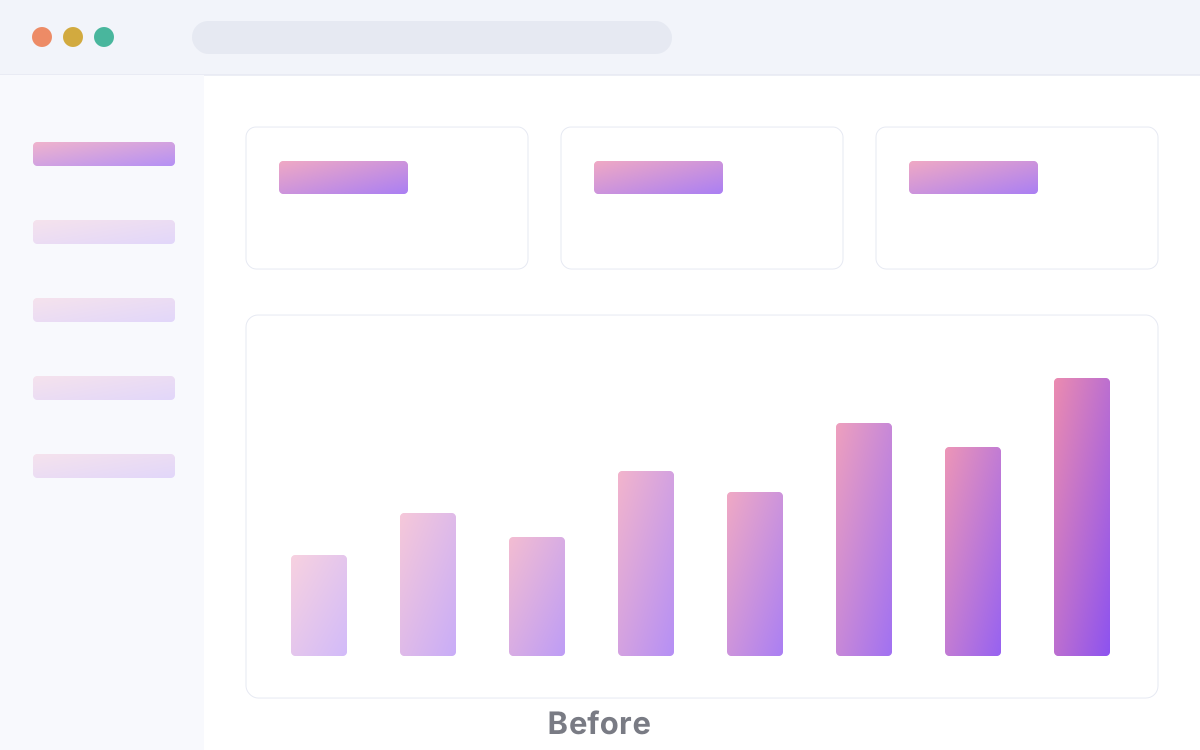
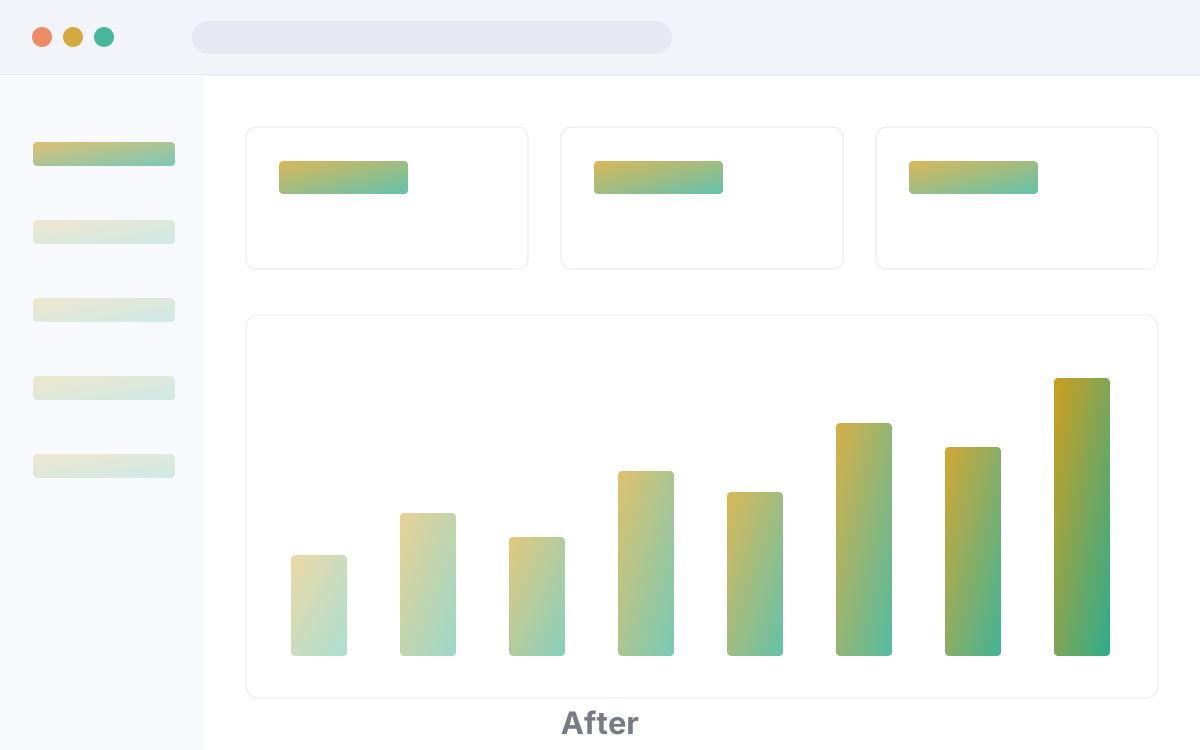 Before we took overAfter 90 days
What clients say
The SEO work compounds. Eleven months in we are ranking for terms we were told were out of reach, and organic is now our largest source of qualified demos.

Their creative testing process is the most disciplined I have seen. Every month we know exactly which hook won and why, and that learning goes straight back into production.

What sold us was the audit. They found tracking that had been broken for eight months and showed us how much revenue we had been mis-attributing. That was before we paid them anything.

Straight answers, senior people on the call, and no padding in the invoice. After three years they still behave like it is month one.

Sample testimonials — replace in build/demo_data.py
What we report on ecommerce management
One figure, tracked the same way every week, with the working shown. Channel metrics are for diagnosis — never for claiming credit.
shot-3.svgA month of ecommerce management, step by step
- 1Catalogue & economics auditProduct data quality, feed health, page performance and contribution margin by SKU after all costs.
- 2Taxonomy & data remediationStructure fixed at source so every downstream channel inherits clean data.
- 3Merchandising & PDP programmePriority pages rebuilt, collections restructured, cross-sell logic implemented.
- 4Pricing & promotion modelMargin tiers set, discount guardrails implemented, promotional calendar modelled.
shot-4.svgEcommerce Management — a wider sample
Click any item to see it full size.





“The SEO work compounds. Eleven months in we are ranking for terms we were told were out of reach, and organic is now our largest source of qualified demos.”
Senior people, and the same ones every month
No pitch team and delivery team. The strategist on your first call owns your account a year later, and the specialists join when their channel is the topic.


What we put in the contract
As featured in
Placeholder mentions — replace with real coverage before launch.

Related work

Scaling a home brand past 8-figure revenue
Rebuilt the account structure, moved to a creative-led testing loop and fixed server-side tracking.

A B2B pipeline engine built on search intent
Topical authority programme paired with ABM ads to the same account list.
Launching a challenger brand in 90 days
Positioning, identity, site and a full-funnel launch campaign from zero.
Cutting app install cost in a crowded category
Creative volume plus event optimisation rebuilt around post-install value.
Local SEO across 24 service areas
Programmatic location pages, GBP overhaul and a review generation loop.
Winning share on marketplaces
Listing rewrite, A+ content and a sponsored strategy rebuilt around margin.
A creator programme that actually converts
Sixty creators, whitelisted ads and a briefing system that keeps quality consistent.
Rebrand plus a site that finally loads fast
New identity, new build, and a conversion programme that ran for two quarters after.
Want an honest read on your Ecommerce Management?
Send us access and we will come back with a written audit — the real problems, ranked, with what we would do first. Yours to keep whether or not you hire us.